
Nike Radars
Book, Hercules Nike Radars

Alien Encounters
BEARN, NATO BEAMER RADAR
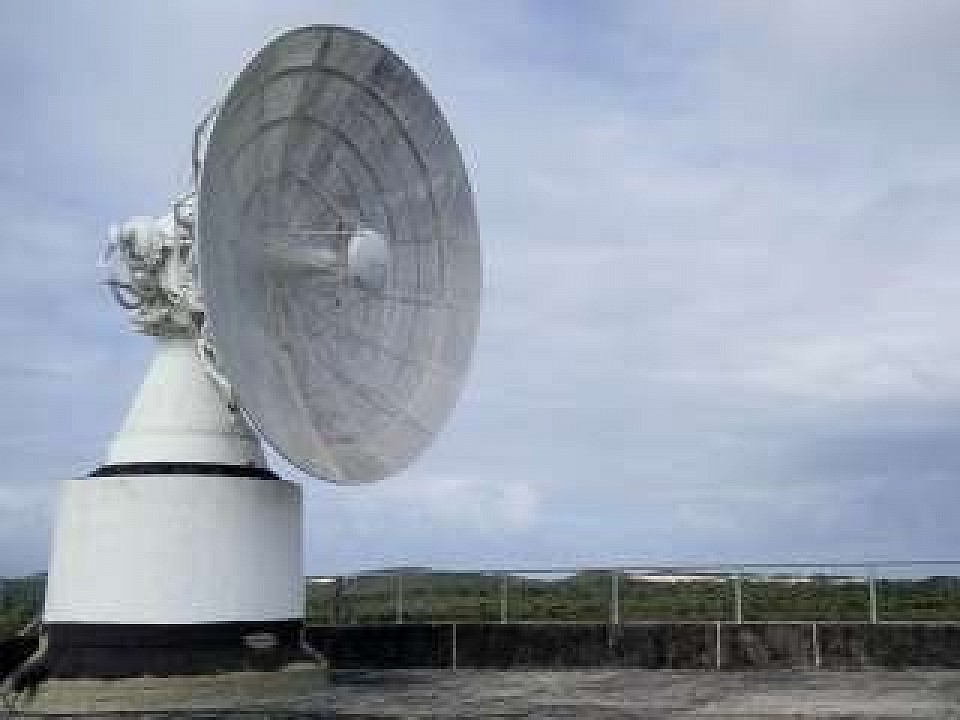
Béarn is operating in the C band (IEEE designation) or in the G band (NATO designation) high-precision automatic target tracking radar, using the conical scanning principle, designed for measuring the trajectory of high-speed missiles at long range.
The radar uses a Cassegrain antenna with a diameter of 4 m providing an antenna gain of 44 dBi. The transmitter uses a magnetron.
CLAM SHELL RADAR
76N6
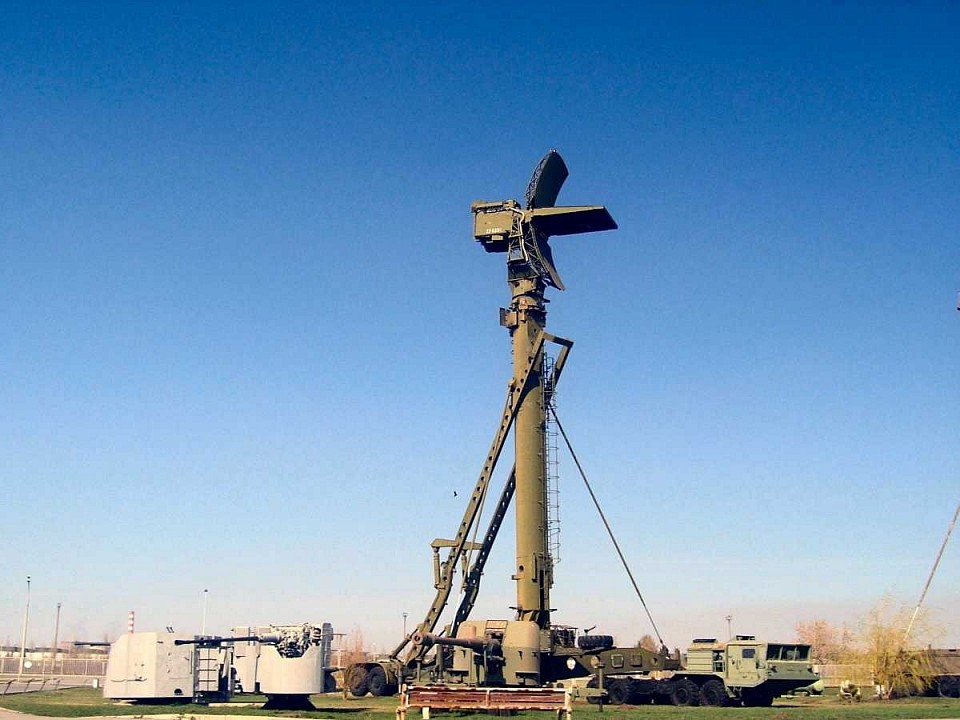
The Acquisition Radar 76N6 (NATO-Designator “Clam Shell”) is an operating in X band (IEEE designation) or in the I band (NATO designation) low-altitude FMCW search and acquisition radar designed to detect and track approaching and receding low radar cross section targets, particularly cruise missiles.
The system will detect targets at extremely low altitudes in ground clutter under intense ECM conditions. This system is described as fully automatic and provides target track information for the fire control system of the static SA-10A or mobile SA-10B Grumble area defence SAM.
Approaching and receding target velocity, range and bearing are provided, with selectable 1 or 6 degree vertical beamwidths, and selectable beam polarization.
It uses a split antenna arrangement with a large beak to prevent spillover from the transmitter. The doubly curved transmit and receive reflectors each measure 9.2 ft per side.
HIPAR
HIPAR (High Power Acquisition Radar) was an L band target acquisition radar designed specifically for the Improved Nike-Hercules air defense missile system.
The mobile version was called AN/MPQ-43. It uses the same electronic components as the stationary system. However, unlike the stationary version, the AN/MPQ-43 is capable of switching the antenna from a cosec² pattern to a fan beam pattern.
Since this radar was very powerful but too expensive, the AN/FPS-56 and AN/FPS-75 were used as replacements in some military units.
CEAFAR NAVY SHIP RADARS
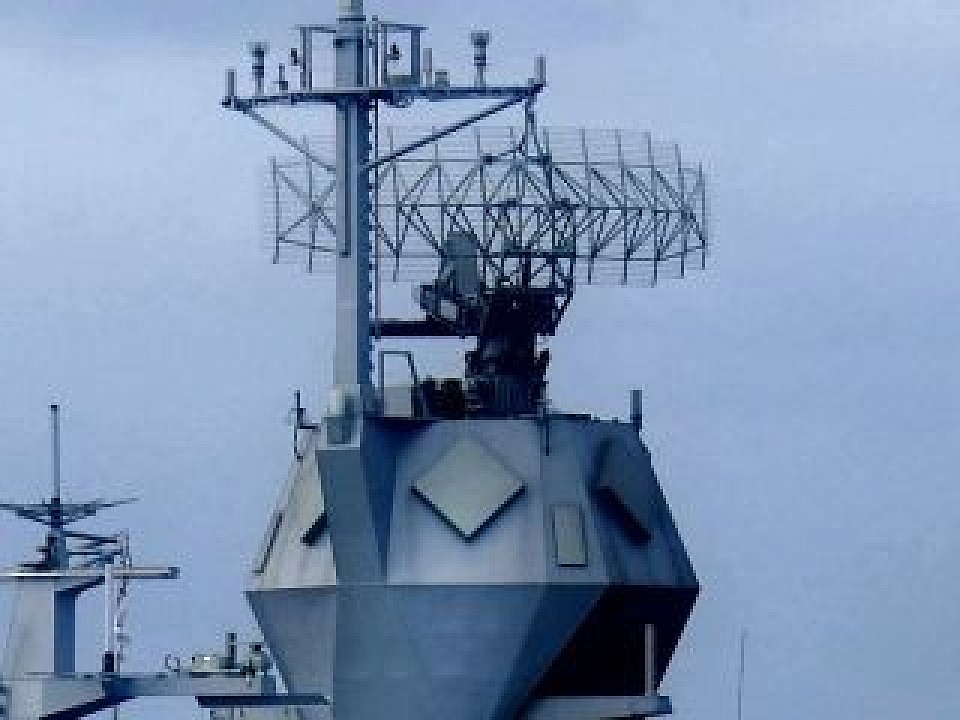
CEAFAR is operating in the S band 3D missile guidance radar on Anzac-class frigates of the Royal Australian Navy. It provides a multi function radar capability able to perform 3D volume search, surface search, fire control support, target classification in demanding, cluttered and jamming environments.
The CEAFAR antenna array is a modular active phased array antenna designed for fixed or mobile mounting. It can be scaled in size and transmit power. The basic modules are tile-like blocks of 8 × 8 single radiators, which are assembled to form larger antenna faces. One of the six square antenna faces in Figure 1 consists of 16 such modules.
Each individual module contains a receiver with complete digitization on the intermediate frequency. Electronic scanning with help of different virtual antenna patterns on the receive path is performed simultaneously with digital beam forming.
AUSPAR (Australia/US Phased Array Radar) is a high-powered version of the CEAFAR architecture. It is a joint venture project between the US and Australia.
CEAMOUNT
The CEAMOUNT is a target illumination radar operating in X band coupled to the CEAFAR. In Figure 1, these are the four rectangular antenna arrays between the CEAFAR antennas.
Source:
Manufacturers home page
Book, Cover & Autographed

Hercules Nike Radars
Godmother Productions
