
Hercules Nike Radar System
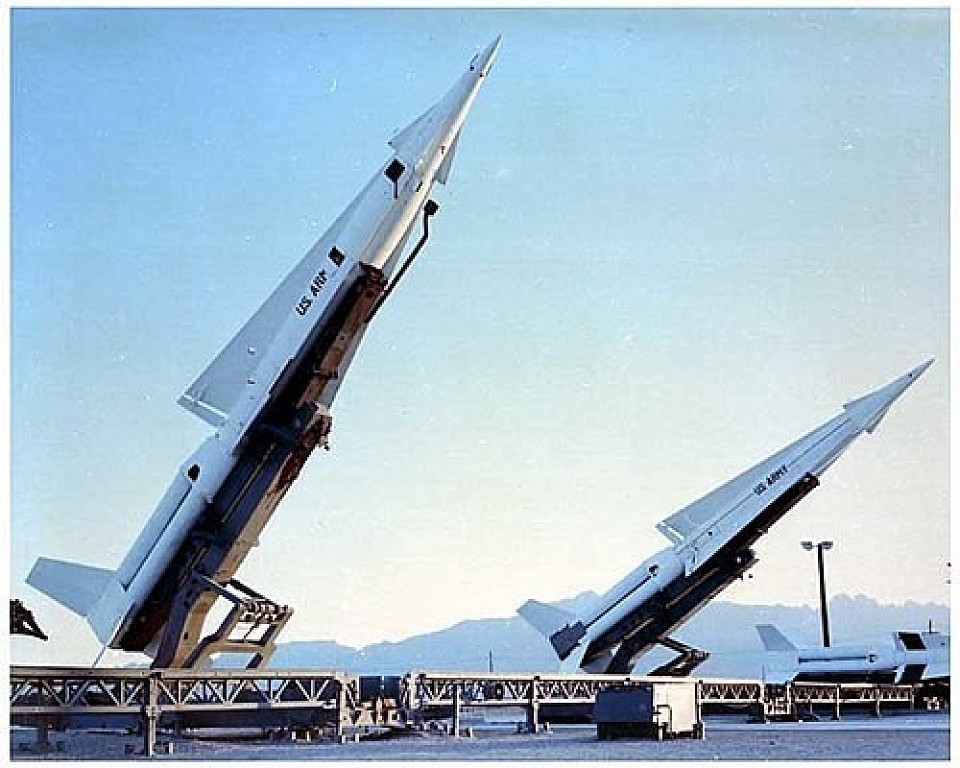
Hercules Nike Missiles
Defense System
The Nike Hercules radar system was a sophisticated Cold War-era ground-to-air defense network using multiple radars (search, tracking, ranging) and an analog computer to guide nuclear-capable missiles, featuring advanced monopulse tracking for precision, HIPAR for high-speed threats, and a transponder on the missile for strong signals, all housed in mobile vans or fixed sites to protect against surprise attacks.
Duncanville, Texas Hercules Nike Radar:
In 1962, the Duncanville Air Force Station housed the Air Force tracking radars for the Dallas-Fort Worth area's Nike missile defense system, which included the Army Air-Defense Command Post (AADCP) for the Nike Hercules system.
Duncanville's Role in the Nike Program Command and Control:
The Duncanville AFS (DF-30DC) was the headquarters for the four surrounding Nike missile launch sites.
The Army's "BIRDIE" system used radar data from the Air Force station to coordinate the local command and control of the Nike Hercules missile batteries.
Radar Systems:
The site incorporated High-Power Acquisition Radar (HIPAR), which was housed in a large radome and used to detect incoming aircraft or ballistic missiles at high altitudes and long ranges.
System Upgrades:
While initially part of the manual BUIC I system in 1962, the overall defense system was upgraded to the more powerful Nike Hercules missiles around that time, with Duncanville as a central command point.
Missile Details: The Nike Hercules was a two-stage, solid-fuel surface-to-air missile capable of Mach 3.65 speeds and a range of over 87 miles.
It could be armed with a conventional or a W-31 nuclear warhead, the latter of which was demonstrated in a live test (Operation Dominic) in the Pacific in November 1962, following the Cuban Missile Crisis.
The facility in Duncanville was crucial to the Cold War air defense of North Texas, integrating Air Force radar surveillance with Army anti-aircraft missile capabilities
Key Components & Functions:
Search Radar: Detected incoming enemy aircraft or missiles at long range.
Track Radars (TTR/MTR): Locked onto the target and simultaneously tracked the missile's path.
HIPAR (High Power Acquisition Radar): Added in improved versions to detect small, fast targets.
TRR (Target Ranging Radar): Provided accurate ranging data, especially in heavy electronic countermeasures (ECM).Analog Computer: Received data from radars, calculated interception, and sent steering commands to the missile.
Missile Transponder: A device on the missile boosted its radar signal, making it easier to track. How it Worked:
Detection:
A search radar found an incoming threat.Tracking: Track radars locked onto the target and the missile, feeding data to the computer.
Guidance:
The computer sent radio commands to steer the missile, essentially "flying" it to intercept the target.
Command Guidance:
This system used ground-based radars to command the missile, unlike later systems that relied more on on-board guidance. System Design:Mobile Concept:
Designed with mobile vans for radars and computers to move around, but often built as fixed sites.
Fixed Sites: Eventually, sites featured separate Launch Areas (missiles) and Battery Control Areas (radars/computers) for safety and function.Security: Required high security (secret clearances, "two-man rule") and military police due to the sensitive, nuclear-armed nature of the system
